
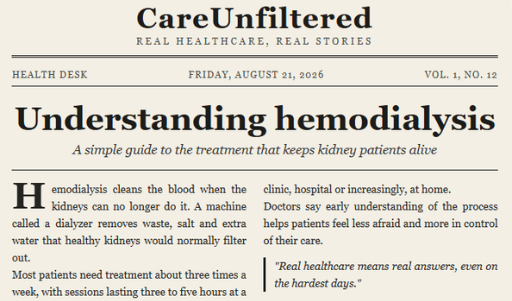

Understanding Hemodialysis: A Simple Guide to a Life-Saving Treatment
By CareUnfiltered — Real Healthcare.
What Is Hemodialysis?
Hemodialysis is a medical treatment that cleans your blood when your kidneys can no longer do the job on their own. Healthy kidneys filter waste, extra salt, and extra water from your blood every single day. But when kidneys fail — a condition doctors call end-stage renal disease (ESRD) or kidney failure — that waste builds up in the body and becomes dangerous.
Hemodialysis uses a machine called a dialyzer (often nicknamed an "artificial kidney") to do this filtering job outside the body. Blood is pulled out through a needle, passed through the dialyzer to be cleaned, and then returned safely back into the bloodstream.
If you or a loved one has just been told you need dialysis, this guide will walk you through the basics — in plain, simple language.
Why Do People Need Hemodialysis?
The most common reasons people need hemodialysis include:
- Chronic kidney disease (CKD) that has reached its final stage
- Diabetes, which is the leading cause of kidney failure worldwide
- High blood pressure, which damages the small blood vessels in the kidneys over time
- Glomerulonephritis, an inflammation of the kidney's filtering units
- Polycystic kidney disease, an inherited condition
When kidney function drops below 10–15%, the body can no longer safely remove waste and fluid on its own. At this point, doctors usually recommend starting dialysis or exploring a kidney transplant.
How Does Hemodialysis Work? (Step by Step)
Here's a simple breakdown of what actually happens during a hemodialysis session:
- Access point – A small area, usually in the arm, is prepared. This is called vascular access and is how blood leaves and enters your body. The most common types are a fistula, a graft, or a catheter.
- Blood removal – Blood flows out of your body through a needle and tube into the dialysis machine.
- Filtering – Inside the dialyzer, your blood passes along one side of a thin membrane while a cleansing fluid called dialysate flows on the other side. Waste products and extra fluid move out of your blood and into the dialysate.
- Blood return – The cleaned blood flows back into your body through a second tube.
- Monitoring – Throughout the session, machines track your blood pressure, fluid removal, and overall safety.
A typical hemodialysis session lasts about 3 to 5 hours, and most people need treatment three times a week, usually at a dialysis center or hospital.
Types of Dialysis: Is Hemodialysis the Only Option?
No — hemodialysis is one of two main types of dialysis:
- In-center hemodialysis – Done at a clinic or hospital, usually three times a week, supervised by trained staff.
- Home hemodialysis – Done at home with a smaller machine, often more frequently but for shorter sessions, giving patients more flexibility and independence.
- Peritoneal dialysis – A different method that uses the lining of your own abdomen (the peritoneum) to filter blood, done daily at home.
Your nephrologist (kidney doctor) will help you decide which option fits your lifestyle, health condition, and support system best.
What Does Hemodialysis Feel Like?
Many first-time patients worry about pain. In most cases, hemodialysis itself is not painful — the main discomfort is usually just the needle insertion at the start. Some people feel:
- Mild fatigue after a session
- Muscle cramps
- Low blood pressure symptoms like dizziness
- A feeling of tiredness that improves with rest
Every patient responds differently, and your care team can adjust settings to make sessions more comfortable over time.
Living Well With Hemodialysis
A kidney failure diagnosis can feel overwhelming, but many people live full, active lives on dialysis for years. A few things that help:
- Follow your fluid and diet plan – Your dietitian will guide you on limiting salt, potassium, phosphorus, and fluid intake.
- Stick to your treatment schedule – Skipping sessions can lead to dangerous waste buildup.
- Watch your access site – Keep it clean and report any redness, swelling, or pain immediately.
- Stay active – Light exercise, when approved by your doctor, can improve energy and mood.
- Lean on support – Connecting with other dialysis patients, family, and counselors can make a real emotional difference.
Hemodialysis vs. Kidney Transplant
Many patients ask whether dialysis is permanent. The answer depends on the individual:
- Dialysis can be a long-term treatment for people who are not transplant candidates.
- For others, dialysis is a bridge while waiting for a kidney transplant, which can restore more natural kidney function.
Your medical team will guide you on which path — or combination of paths — is right for your specific health situation.
Final Thoughts
Hemodialysis is not just a medical procedure — it's a lifeline that allows people with kidney failure to continue living meaningful lives. Understanding how it works, what to expect, and how to manage daily life around it can make the journey feel far less intimidating.
At CareUnfiltered, we believe healthcare should never feel confusing or cold. Real healthcare means real answers, real stories, and real support — especially for conditions as life-changing as kidney failure.
If you or someone you love is starting this journey, know that you are not alone, and thousands of people live strong, full lives with the help of hemodialysis every single day.
SEO Meta Details
Suggested Title Tag: Understanding Hemodialysis: A Simple, Complete Guide (2026)
Meta Description: Learn what hemodialysis is, how it works, and how to live well with kidney failure. A simple, easy-to-understand guide by CareUnfiltered.
Target Keywords: hemodialysis, what is hemodialysis, kidney failure treatment, dialysis for kidney failure, how does dialysis work, types of dialysis, hemodialysis vs peritoneal dialysis, living with kidney disease, dialysis patient guide, chronic kidney disease treatment.
CareUnfiltered — Real Healthcare. Real Stories.
Disclaimer: This article is for general educational purposes only and is not a substitute for professional medical advice. Please consult a nephrologist or healthcare provider for guidance specific to your condition.
Suggested URL Slug: /understanding-hemodialysis-simple-guide
Estimated Reading Time: 4–5 minutes