

Saunf, Jeera, Methi, Ajwain & Amla Water: What Are the Possible Benefits?
Saunf, jeera, methi dana and ajwain are common ingredients in Indian kitchens. Many people soak these seeds overnight, strain the water in the morning and add amla powder before drinking it.
But does this traditional drink really “detox” the body, burn fat or cure digestive problems?
The answer is more nuanced.
There may be some potential benefits from individual ingredients, particularly around digestion and certain metabolic markers. However, there is not enough good-quality evidence to say that this exact combination, in this exact quantity, provides specific medical benefits.
Let's look at it without the social-media hype.
The Traditional Morning Drink
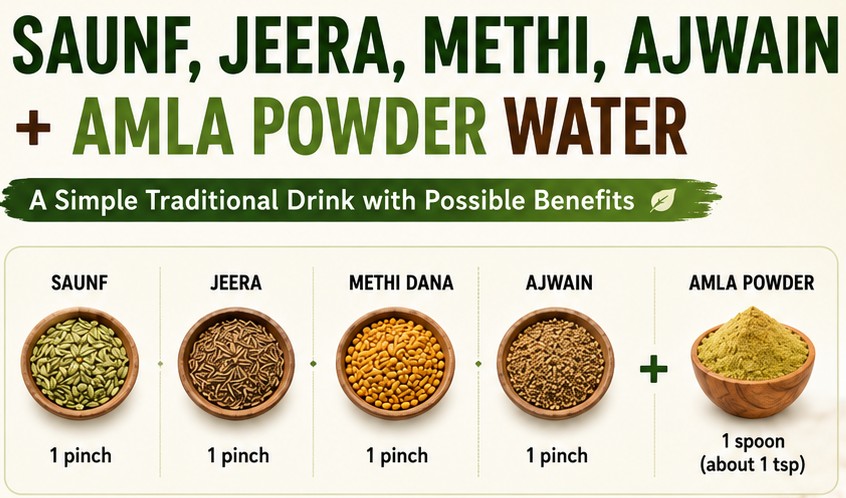
A commonly shared preparation is:
Saunf (fennel seeds): 1 small pinch
Jeera (cumin seeds): 1 small pinch
Methi dana (fenugreek seeds): 1 small pinch
Ajwain (carom seeds): 1 small pinch
Amla powder: about 1 teaspoon
Water: enough to soak the seeds overnight
How people prepare it
Soak the four seeds in water overnight. In the morning, strain the water and mix in approximately 1 teaspoon of amla powder.
There is no established medical standard that says these exact quantities or overnight soaking are required. Think of this as a traditional dietary drink, not a proven treatment.
What Could Each Ingredient Offer?
🌿 1. Saunf (Fennel)
Fennel has traditionally been used for digestive complaints such as gas and abdominal discomfort. Some clinical research has investigated fennel preparations for specific conditions, but this does not prove that fennel water treats digestive disorders in everyone.
So the realistic claim is:
Saunf may support comfortable digestion, but it should not be presented as a treatment for acidity, IBS or other digestive diseases.
🌱 2. Jeera (Cumin)
Cumin is widely used as a culinary spice and has been investigated for various metabolic and digestive effects.
However, research on cumin does not mean that drinking soaked cumin water will automatically improve digestion, burn fat or control blood sugar.
Food ingredient ≠ proven medicine.
🌾 3. Methi Dana (Fenugreek)
Fenugreek is one of the better-studied ingredients in this combination.
Research suggests fenugreek may help lower blood sugar in people with type 2 diabetes, but NCCIH notes that many studies have limitations and the evidence is not strong enough to treat fenugreek as a replacement for medical treatment.
Fenugreek can also cause digestive side effects, and larger amounts may lower blood sugar too much. It can interact with medicines.
🌿 4. Ajwain (Carom Seeds)
Ajwain is traditionally used for digestive discomfort, especially gas, bloating and indigestion.
Some preliminary research and traditional use suggest it may have carminative (gas-relieving) properties, but strong clinical evidence in humans is still limited.
So the realistic understanding is that Ajwain may support digestive comfort in some people, but it is not a proven treatment for chronic digestive disorders.
🍋 5. Amla Powder
Amla contains several bioactive compounds and has been studied for antioxidant and metabolic effects.
A systematic review of randomized trials found that amla supplementation was associated with improvements in some markers such as blood glucose and cholesterol. However, the studies involved specific amla preparations, doses and durations—so those results cannot automatically be applied to one teaspoon of amla powder mixed into this homemade drink.
A small randomized controlled study in healthy adults also investigated amla supplementation and reported some favorable changes in vascular and oxidative-stress markers, but it was a small study and used a specific standardized preparation.
So, What Are the Possible Benefits?
If this drink suits you, it may be a simple way to include familiar spices and amla in your diet.
Possible benefits worth discussing—not promising include:
May be a refreshing morning drink.
May support fluid intake.
The ingredients contain various plant compounds.
Some people may find the spices comfortable for digestion.
Fenugreek and amla have been studied for certain metabolic markers, although evidence varies.
It can be part of an overall healthy dietary routine.
But there is no strong evidence that this particular recipe “cleanses” the body, melts belly fat, or cures disease.
Does It Detox Your Body?
This is where social media often exaggerates.
Your body already has natural systems, particularly the liver and kidneys, that process and eliminate waste.
So this drink should not be marketed as a “body detox” or “toxin-flushing” drink.
For a deeper explanation, read our related CareUnfiltered article:
That article explains the difference between social-media detox claims and what the body actually does.
Can It Help With Weight Loss?
Don't expect this drink to burn belly fat.
There is no good evidence that soaking these four seeds overnight and drinking the water with amla directly causes meaningful fat loss.
If someone loses weight while drinking it, other changes—such as eating fewer calories, improving food choices or becoming more active—may be responsible.
A healthy routine matters much more than one morning drink.
Who Should Be Careful?
“Natural” does not automatically mean “safe for everyone.”
Be particularly careful if you:
Are pregnant or planning pregnancy.
Take medicines for diabetes or blood sugar.
Take regular prescription medicines.
Have a medical condition.
Have allergies to any of these ingredients.
Develop stomach pain, diarrhoea, nausea or other symptoms after drinking it.
Fenugreek deserves particular caution during pregnancy in amounts greater than those normally found in food, and it may interact with medicines or cause low blood sugar at higher doses.
If you take medicines regularly, discuss frequent use of herbal preparations with your healthcare professional. Herbal products can interact with medicines, and evidence about their safety and effectiveness varies considerably.
Myth vs Fact
1. Myth: “This drink detoxes your liver.”
Fact: There is no good evidence that this homemade drink performs a special liver-detoxification process.
2. Myth: “It burns belly fat.”
Fact: No drink can selectively burn belly fat. Sustainable fat loss depends mainly on overall energy balance, diet, physical activity and long-term habits.
3. Myth: “Natural means completely safe.”
Fact: Herbal ingredients can have side effects and may interact with medicines.
4. Myth: “One teaspoon of amla gives the same results as clinical studies.”
Fact: Research often uses specific preparations, doses and durations. Results cannot automatically be transferred to every homemade recipe.
5. Myth: “If it works for someone on Instagram, it will work for everyone.”
Fact: Individual experiences are not the same as clinical evidence.
Frequently Asked Questions
1. Can I drink saunf, jeera, methi and ajwain water every morning?
There is no established medical guideline recommending this exact combination every morning. If you choose to consume it as a dietary drink, use modest amounts and stop if it causes discomfort.
2. Should I drink it on an empty stomach?
There is no strong evidence that drinking this particular combination on an empty stomach makes it more effective.
3. Can I add amla powder to the soaked water?
Yes, amla powder can be mixed into the strained water if it suits you. However, adding amla does not turn the drink into a proven detox or treatment.
4. Can this drink reduce gas and bloating?
Some of the ingredients have traditional or preliminary evidence related to digestive comfort, but the effect can vary from person to person. Persistent or severe bloating should not be self-treated indefinitely.
5. Can it control diabetes?
It should not be used as a replacement for diabetes medicines or prescribed treatment. Fenugreek and amla have been studied for blood-glucose-related outcomes, but evidence varies and the homemade combination has not been established as a diabetes treatment.
6. Can I drink it for weight loss?
You can include it as part of a balanced diet if it suits you, but there is no good evidence that this recipe itself causes significant fat loss.
The Unfiltered Bottom Line
Saunf + jeera + methi + ajwain + amla water can be a traditional dietary drink, but it is not a magic detox, fat-burning or disease-curing formula.
Some individual ingredients have interesting research behind them, but the evidence for the exact overnight-soaked combination is limited.
Use it as a small part of a healthy lifestyle—not as a replacement for balanced nutrition, exercise, sleep or medical treatment.
Health doesn't need a miracle drink. It needs consistent habits.
SEO Keywords
saunf jeera methi ajwain water, saunf jeera methi ajwain benefits, amla powder morning drink, methi ajwain jeera saunf water, overnight soaked seeds water, morning detox drink, natural digestive drink, amla water benefits, jeera saunf ajwain water, healthy morning drink.
Disclaimer
This article is for general health awareness and educational purposes only. The information does not constitute medical advice, diagnosis or treatment. Evidence for individual herbs and ingredients may not apply to this exact homemade combination or dosage. People who are pregnant, taking medicines, managing diabetes, or living with a medical condition should consult a qualified healthcare professional before using herbal preparations regularly.